
Who Really Leads a Community? Reflections on Power, Influence, and Change
Leadership is one of the most important ingredients in building healthy, thriving communities. At its core, leadership is about influence: the ability to inspire, guide, and empower others toward positive change.
When we think about community development, we often focus on resources, infrastructure, education, or economic opportunities. All of these matter. Yet beneath each of them lies a critical question: Who is influencing the community, and to what end?
In many communities, especially those facing significant social and economic challenges, leadership is more complicated than simply identifying those who hold official titles. There are often two kinds of leaders operating side by side: those with legitimate authority and those whose influence comes from other sources.
Formal leaders, whether elected officials, community representatives, educators, or church leaders, are often tasked with serving their communities but may have limited resources to reward positive behavior or address ongoing challenges. Their authority is legitimate, but their influence can sometimes be constrained.
At the same time, other individuals may emerge as highly influential figures because they control resources, opportunities, or access to things people need. In some cases, these individuals use their influence for good. In others, they create environments that are unhealthy, harmful, or even dangerous.
Understanding this dynamic requires us to think about the different sources of power.
Leadership experts often describe six sources of power: coercive, reward, referent, legitimate, informational, and expert power.
Some forms of power are easier to recognize than others. Coercive power relies on fear, threats, or intimidation. Reward power comes from the ability to provide something people value. Referent power emerges when people admire someone and want to emulate them.
In communities where resources are scarce, reward and referent power can become especially influential. Individuals who appear successful, connected, or capable of providing opportunities can quickly gain followers and become role models, particularly for vulnerable young people.
This reality can make it difficult for formal community leaders to compete for influence, even when their intentions are positive and their commitment is genuine.
Yet there is hope.
Two forms of power—informational power and expert power—can dramatically strengthen the effectiveness of legitimate leaders. Informational power comes from access to valuable knowledge and information. Expert power comes from competence, wisdom, and demonstrated expertise.

When community leaders are equipped with knowledge, skills, training, and ongoing support, their ability to influence positive change grows significantly. In many ways, expert power may be the most sustainable and transformative source of influence available to a leader.
This is one reason why leadership development matters so deeply in community work.
But leadership is not merely about gaining skills or increasing influence. It is also about character.
Many leadership scholars have emphasized that the most effective leaders are those who inspire transformation in others. James MacGregor Burns' transformational leadership model highlights qualities such as inspiring a shared vision, encouraging growth, and serving as a positive role model. Similarly, James Kouzes and Barry Posner identified practices such as modeling the way, enabling others to act, and encouraging the heart.
These ideas resonate because they point to something timeless: leadership is not simply about getting people to follow. It is about helping people become more than they thought they could be.
“Leadership, at its core, is about influencing and empowering people to bring about change.”
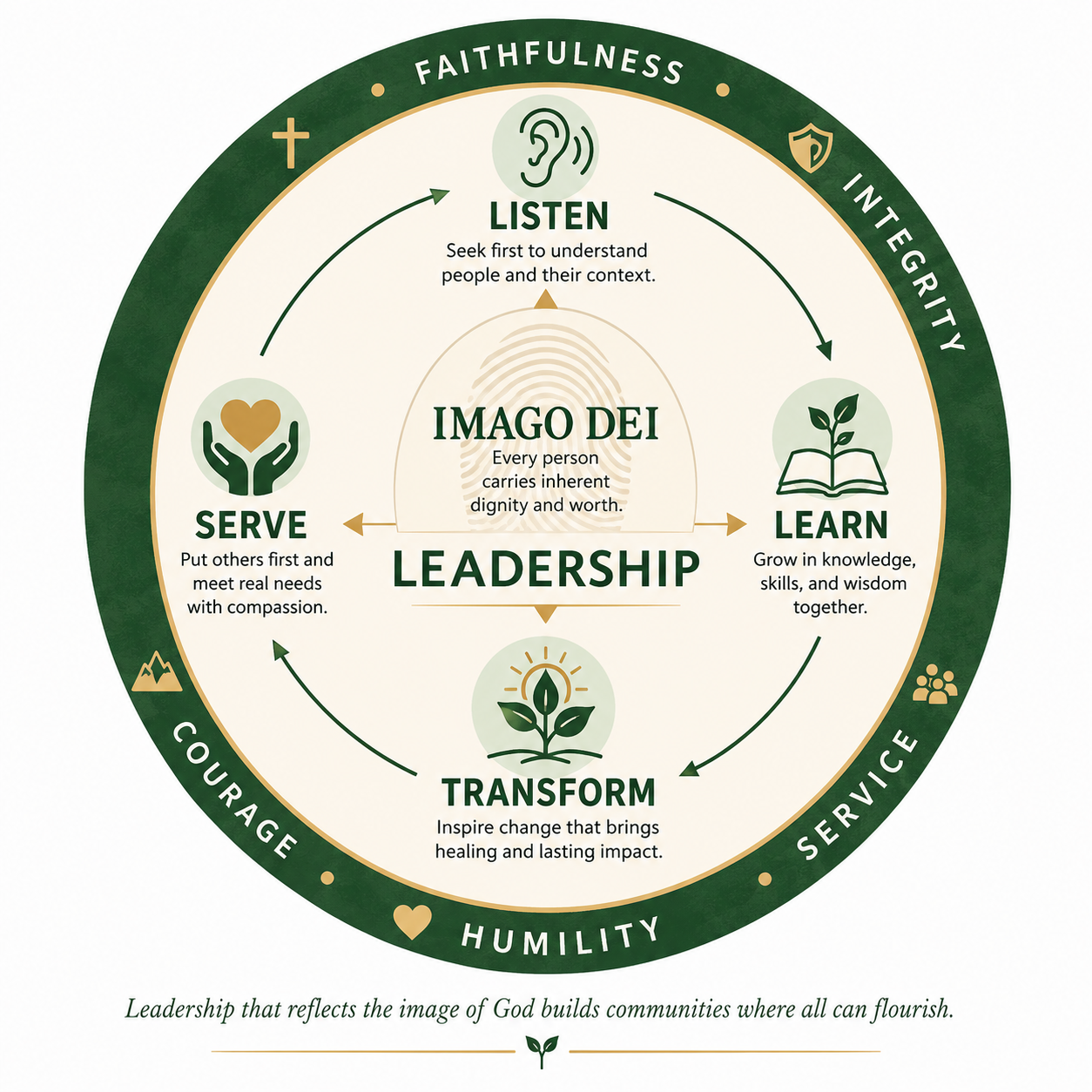
At Jalawelo, we often speak about the importance of faithfulness, integrity, and service. These qualities are not optional extras for leaders; they are foundational.
Faithful leaders remain committed to their mission even when progress is slow. Leaders with integrity keep their promises, tell the truth, and act consistently with their values. Servant leaders seek the well-being of others and invest in their growth rather than pursuing personal gain.
Perhaps most importantly, effective leaders understand that lasting change begins within.
Peter Senge, in his work on organizational learning and change, observed that meaningful transformation requires personal transformation. Communities rarely change beyond the capacity of their leaders to change themselves.
This truth is particularly relevant in community development. While policies, programs, and investments are important, they are not enough on their own. Sustainable transformation requires leaders who are willing to grow, learn, and model the change they hope to see in others.
For Jamaica and communities around the world, the need for courageous, resilient, and principled leaders remains as important as ever.
Communities flourish when leaders use their influence to serve rather than control, to empower rather than exploit, and to build hope rather than fear.
Leadership, at its best, is not about power for its own sake. It is about using influence responsibly to create the conditions where people, families, and communities can thrive.
And that is a kind of leadership worth investing in.